6701 N. Trenton Ave., Tulsa, OK 74126
918 919 8029

Social Media

โซเชียลมีเดียของทางวัด

Buddhist Doctrine

หลักคำสอนทางพระพุทธศานา

ตตฺราปิ สรตี โย

ตัตราปิ สะระตี โย

วัย ย่อมเสื่อมไปทุกขณะ

Articles

บทความทางพระพุทธศาสนา

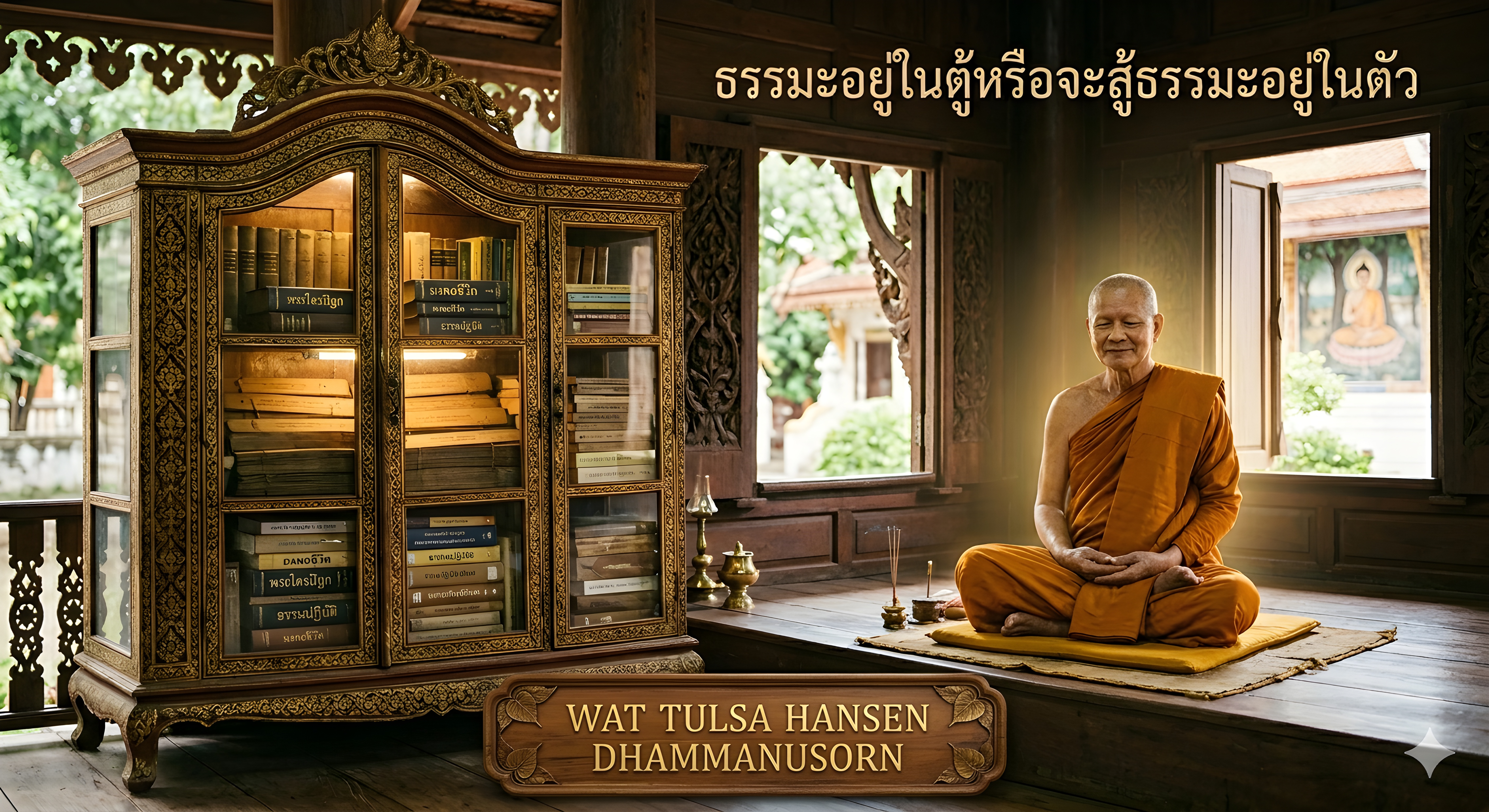
Dhamma on the Shelf vs. Dhamma in the Self

20/04/2026

"Dhamma on the shelf can never match Dhamma in the self." (ธรรมะอยู่ในตู้หรือจะสู้ธรรมะอยู่ในตัว)

This classic Buddhist proverb perfectly illustrates the difference between theoretical knowledge and actual practice. It’s the contrast between knowing the path and actually walking it.

Breaking Down the Comparison

  • Dhamma in the Cabinet (Theory): This refers to the scriptures (Tipitaka), Dhamma books, or even the vast knowledge we "store" in our heads. It is information we remember but have yet to apply to our lives.
  • Dhamma in the Person (Practice): This is when those teachings become part of your character and spirit. It is the embodiment of mindfulness, letting go, and emotional intelligence in real-time.

Why is "Dhamma Within" Better?

  1. Real-World Problem Solving: A book on a shelf can't help you when you're overwhelmed by anger or grief. However, if Dhamma is "in you," your mindfulness kicks in automatically to handle the situation.
  2. Internal Transformation: True practice—generosity, morality, and meditation—refines the heart. This creates a sense of peace and simplicity that reading alone can never achieve.
  3. The Ultimate Refuge: In a crisis, or even in our final moments, we cannot carry a library with us. The only thing we can truly rely on is the spiritual strength we have cultivated within our own hearts.

Easy Ways to Bring Dhamma "Into Yourself"

You don't need to live in a cave to practice. You can turn everyday activities into spiritual training:

  • Mindful Breathing: * How: Every time you check your phone or wait for a red light, take one deep breath, exhale slowly, and give a tiny smile.
    • Result: This activates "mindfulness" immediately, pulling your scattered thoughts back to the present.
  • Mindful Eating: * How: With the first bite of your meal, chew slowly. Truly notice the flavor and the sensation of swallowing without looking at a screen.
    • Result: You practice "clear comprehension" (Sampajanna), preventing the mind from drifting away.
  • Changing Anger into Understanding: * How: When faced with a rude person, tell yourself, "They must be suffering/unhappy, too."
    • Result: "Compassion" and "Wisdom" replace anger, keeping your heart cool even when the environment is hot.

The Bottom Line

  • Dhamma in the cabinet is like a map sitting on a table.
  • Dhamma in the self is like actually arriving at the destination.

Knowing a hundred rules but practicing none is far less valuable than mastering just one rule until it becomes your nature. Dhamma isn't an academic subject for an exam; it’s a tool for "polishing" ourselves to be lighter and happier every day.


"Knowing the map is good, but you haven't moved until you take the first step."

Looking at your current daily routine, is there one specific "Dhamma tool" (like patience, breathing, or letting go) that you feel has truly moved from the "cabinet" into your "self" and helped you get through a tough day?

Calendar of Events

ปฏิทินกิจกรรมของทางวัด

Year-Round Activities

for

Wat Tulsa Hansen Dhammanusorn 2026

31 Dec. 2025 New Year Celebration
1 Mar. 2026 Magha Puja Day
12 Apr. 2026 Songkran Festival (Thai New Year)
24 May. 2026 Visakha Puja Day
26 Jul. 2026 Asalha Puja-Buddhist Lent Ceremony
27 Sep. 2026 Thai, Lao, Cambodia Memorial Ceremony
25 Oct. 2026 Community Robe Offering-The End of Buddhist Lent Day